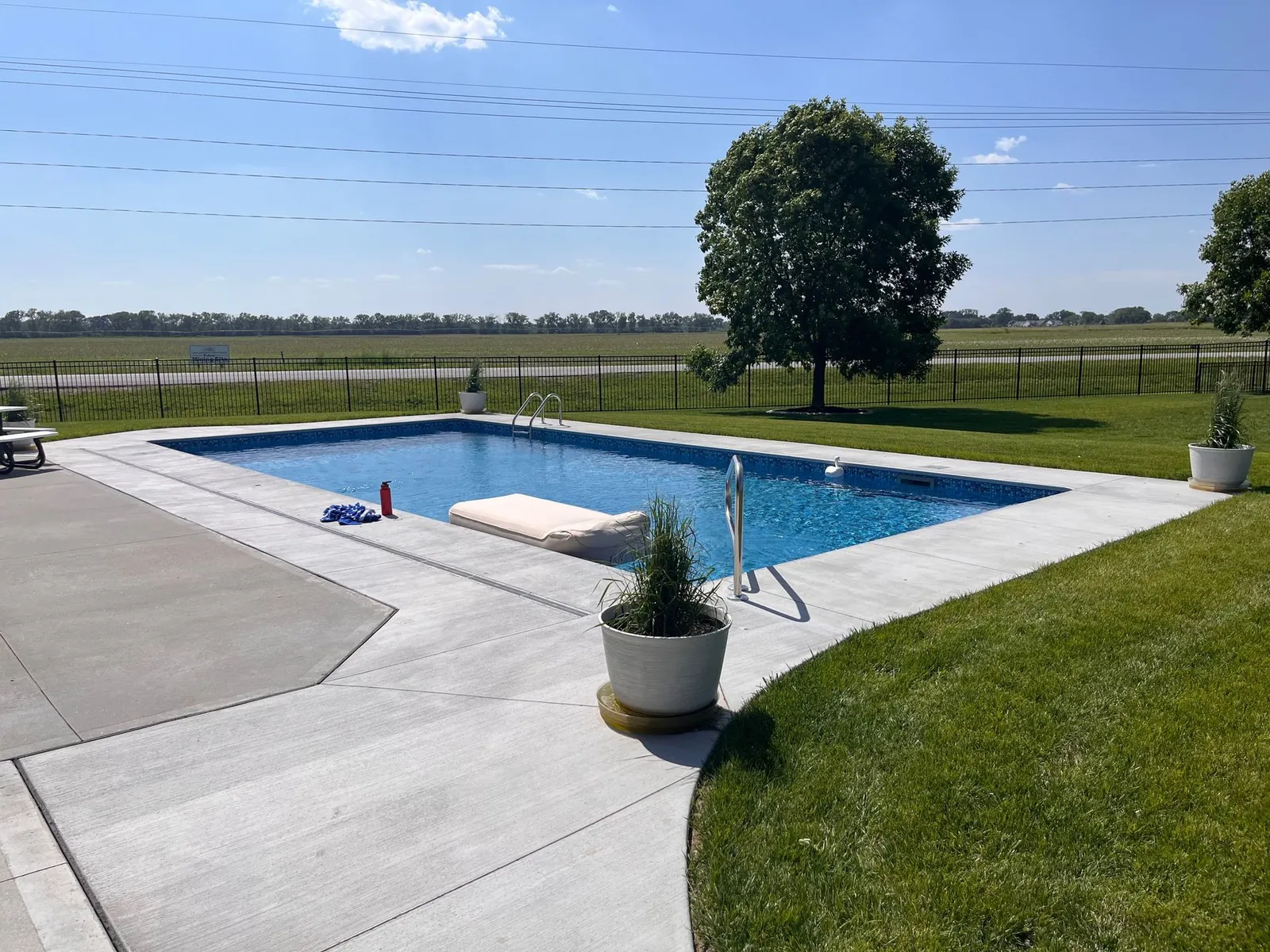
A pool closing in Nebraska is not a cover and a wave goodbye. Done right, it protects the plumbing from a freeze that can crack pipes under the deck, keeps the water from turning into a swamp by April, and makes the spring opening a one-visit job. This is the checklist our crew works through on every closing in Omaha, Papillion, La Vista and the rest of the metro. Use it to understand what you are paying for, or to do it yourself.
When to close a pool in Omaha
Close when the water stays below about 65°F, which in Omaha usually means mid-October to early November, and always before the first hard freeze. Closing too early, while the water is still warm, invites algae to grow under the cover all fall; closing too late risks a freeze with water still in the lines. Watch the ten-day forecast, not the calendar.
The checklist
- Balance the water a few days ahead. pH 7.2 to 7.6, total alkalinity 80 to 120 ppm, calcium hardness 175 to 275 ppm. Balanced water protects the liner and plaster all winter.
- Clean it like you mean it. Brush walls, vacuum, skim, empty the baskets. Debris left in the pool feeds algae and stains surfaces over five months.
- Add the winterizing chemicals. A winter algaecide, a winter shock or enzyme, and a metal and stain preventer if you are on well water. A floater with slow-release chlorine is optional; never let tablets sit on the liner.
- Lower the water level. Below the skimmer mouth for a mesh safety cover, or per the cover maker's instructions for a solid cover. Never drain a pool completely; an empty vinyl pool can lift or lose its liner.
- Blow out and plug the lines. This is the step that matters most in Nebraska. Compressed air clears the skimmer, return and main drain lines, then each is plugged (or filled with pool antifreeze on lines that cannot be fully cleared). A gizmo or skimmer guard protects the skimmer from ice expansion.
- Drain the equipment. Pull the drain plugs on the pump, filter, heater and chlorinator and store them in the pump basket. Leave the filter's air relief open. A heater with water left in its header is the most common spring repair bill we see.
- Remove and store accessories. Ladders, handrails, the skimmer basket, the return eyeballs, the cleaner and its hose. Rinse and dry everything.
- Cover it properly. A safety mesh cover anchored to the deck is the safest and the easiest to live with. A solid tarp cover needs water bags on every seam and a cover pump for rain and snowmelt. Either way, the cover should be tight enough that a toddler or a dog cannot slip under it.
- Check it through the winter. After heavy snow or ice, make sure the cover is not sagging into the water and the water level is where you left it. A sudden drop means a leak and is worth a call before spring.
Salt pools, heaters and above-ground pools
Salt systems get the cell removed, cleaned and stored indoors. Heaters need every drop out of the heat exchanger. Above-ground pools follow the same steps with an air pillow under the cover to take up ice expansion and a cover tight to the top rail. Spas tied into the pool are closed with the pool; stand-alone hot tubs stay running all winter.
What our closing includes
Our crew balances, blows out and plugs every line, adds the winter chemicals, drains the equipment, and installs your cover, on in-ground and above-ground pools, safety covers and solid covers. The booking form lists the current closing options; repairs found during the closing are quoted separately so there are no surprises on the invoice. Winterizing chemicals, plugs, cover pumps and air pillows are in the store for pickup if you are closing it yourself.
Frequently asked questions
Can I close my own pool?
Yes, if you have a compressor that can clear the lines and you follow the order above. The blow-out is where most do-it-yourself closings go wrong, and a cracked return line under a concrete deck costs far more than a professional closing.
Should I shock the pool before closing?
Yes, two to three days before, so the chlorine level has settled back to normal by closing day. High chlorine under a cover for months bleaches liners.
How low should the water be?
Just below the skimmer for mesh covers. Follow the cover manufacturer for solid covers; some want the water higher to support the cover. Never fully drain.
When do you open pools in the spring?
Opening season in Omaha runs April through early June. Earlier is better for water quality; the sooner the circulation starts, the less algae you fight. Openings book up fast, so reserve in March.