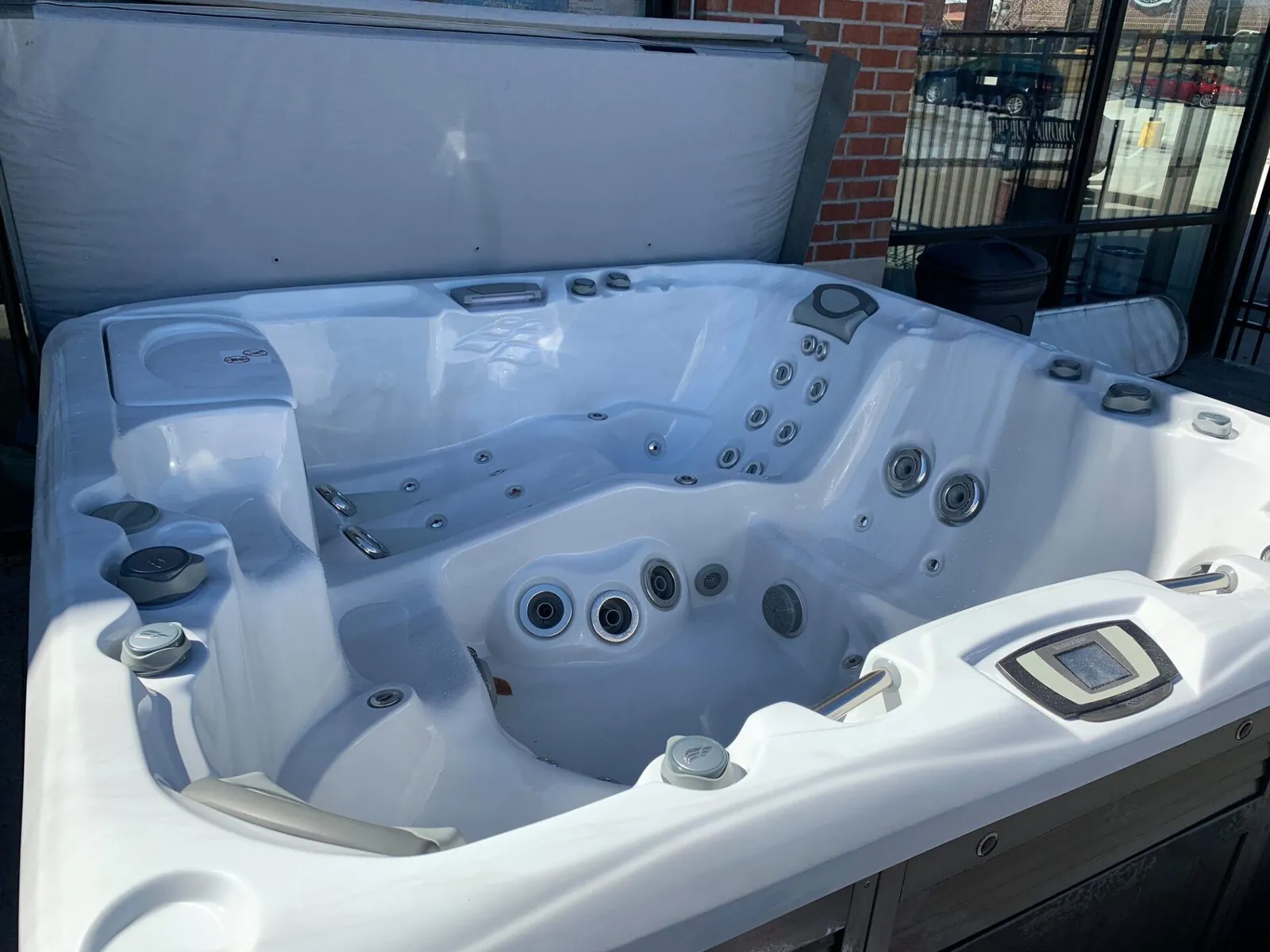
A hot tub heats a small body of water through a small heater, and a handful of sensors watch that heater like hawks. The moment they do not like what they see (not enough water moving, water too hot at the element, a sensor reading that makes no sense) they cut the heat and put a code on the topside display. That is the system working. More often than not the fix is upstream of the heater, and you can get there with a hose, a flashlight and ten minutes before anyone books a visit.
First, the things that are not the heater
The filter. A clogged cartridge starves the pump, the flow switch sees no flow, the heater is locked out, and the display says FLO or flashes. Pull the filter, hose it hard, and run the tub without it for a few minutes to see whether the code clears. If it does, the filter needs a chemical soak or a replacement. Sundance and Horizon cartridges are on the shelf at the store; other brands are ordered by model.
Water level. Water below the top of the filter or the skimmer intake lets the pump pull air. Top it up to the manufacturer's line (usually a few inches above the highest jet or the filter opening) and watch the code.
An air lock. After a drain and refill, the pump can fill with air and spin without moving water: the jets sputter, the heater sees no flow, and dr or dry comes up. Most tubs clear it by cycling the jets a few times from the topside; stubborn ones need the pump union loosened a quarter turn until water weeps out and the air escapes, then snugged back by hand. Power off first.
Valves and diverters. A slice valve on the plumbing left closed after a filter change, or a diverter turned so no water goes through the heater loop, looks exactly like a dead heater. Open everything, then test.
The mode, the setpoint, the cover. Many control packs have an economy or sleep mode that only heats during filter cycles, so the water drifts cool between them without any error. Check the mode, make sure the setpoint is above the water temperature, and look at the cover: a waterlogged cover gives heat to the sky all night and makes a healthy heater look weak.
Then, what the display is telling you
| What you see | What it usually means | Your move |
|---|---|---|
| FLO, FL, or a flashing light | Flow problem: dirty filter, low water, air lock, a closed valve, or a failed flow or pressure switch. | Filter, water level, valves, burp the pump. If it comes back with clean flow, the switch or the circulation pump is next. |
| OH, OHH, HL | Overheat or high limit: the water at the element got too hot, usually from low flow, a long filter cycle on a hot day, or a pump stuck on. | Open the cover, let it cool, check the filter and the filter-cycle length. Repeating with good flow: sensor, relay or board. |
| dr, dry, dY | Dry heater: no water at the element. Almost always an air lock after a refill or a very low water level. | Fill, burp the pump, reset once. Do not keep resetting with the heater dry. |
| SN, Sn1, Sn2, SnA/SnB | A temperature sensor is open, shorted or disagreeing with its partner. | Reset once. If it returns, a sensor replacement; a one-visit job. |
| ICE, IC, or the tub running by itself in winter | Freeze protection: the pack runs the pumps because the water or the pipes are cold. | Normal in a Nebraska winter. Make sure the heater is actually heating and the cover is on. |
| Dashes or ---- after power-up | Priming mode: the pack is waiting a few minutes before it allows heat. | Wait it out; run the jets to clear air; it will start heating on its own. |
| Trips the GFCI or breaker | A short somewhere: heater element, a pump, the ozonator, or moisture in the equipment bay. | Leave it off and call. Each component gets tested rather than guessed at. |
| Lukewarm, no code | Heater element or relay on the way out, economy mode, a long gap between filter cycles, or a cover that no longer insulates. | Mode and cover first. Water that will not climb past lukewarm with good flow and no code is a repair visit. |
| Weak jets | Air lock, a diverter set wrong, a clogged filter, or a worn pump. | Filter and diverters first; a pump that hums and stays weak is a technician's job. |
| Foamy or cloudy water | Not a fault: body oils, detergent, an old cartridge, or chemistry off. | Free water test at the counter; drain and clean if it has been more than three or four months. |
Every brand spells these differently (Balboa and Gecko packs run many tubs, and Wellis, Sundance and Horizon each have their own display), but the families are the same: flow, heat limit, dry heater, sensor, freeze protection, priming. The label inside the cabinet door or on the control box tells us the pack; take a photo of it and of the code before you clear anything.
Reset once, then stop
One reset is fair: power off at the breaker for thirty seconds, power on, let it prime, run the jets. If the same code comes back a second time with the filter clean, the water full and the valves open, more resets only hide the problem from the person who has to find it. Note what the tub was doing when it faulted and how long it had been running.
When to stop and call
Anything that trips the GFCI, any burning smell, water in the equipment bay, a code that returns after one clean reset, or a tub in January that will not heat at all: that last one is urgent, because a cold tub in a hard freeze becomes a plumbing job in a day or two. The hot tub repair page lists what to have ready (brand and model, a photo of the display, the water level and filter state, when it last ran normally, whether the breaker tripped) and covers Wellis, Sundance, Horizon and the other major brands across Omaha, Papillion, La Vista, Bellevue, Elkhorn, Gretna, Bennington and Council Bluffs.
How to not read this page again
- Filter care. Rinse weekly, soak monthly, replace about yearly. A starved filter is behind a lot of heater and flow complaints.
- Fresh water every three to four months. Dissolved solids build up until the water fights you. The drain and clean is on the hot tub service page, and so are maintenance plans that do the testing and the filter care for you.
- Balanced water. Low pH eats heater elements and seals. Free water testing at the counter; spa chemicals and sanitizers and balancers on the shelf, with the doses written down.
- Keep it running in winter. Water held at temperature with the cover strapped cannot freeze; a tub shut off half-full can. More in the Omaha hot tub buying guide, winter section.
Pool heater acting up instead? That is a different animal with the same first rule (flow before anything): pool heater won't ignite or heat.
Frequently asked questions
What does FLO mean on a hot tub?
Flow: the control pack is not seeing enough water moving through the heater. Clean or replace the filter, top up the water, open every valve and clear any air lock after a refill. If FLO returns with all of that right, the flow or pressure switch or the circulation pump has failed, which is a repair visit.
Why does my hot tub say OH?
Overheat: the water at the heater got too hot, almost always because too little water was moving, or a filter cycle ran long on a hot afternoon with the cover on. Open the cover, let it cool, clean the filter and shorten the cycles. If it keeps happening with good flow, a sensor or the board is next.
Why won't my hot tub heat past lukewarm?
Check the mode first: economy and sleep modes heat only during filter cycles. Then the cover, because a waterlogged cover gives the heat away faster than the heater makes it. With the mode right, a tight cover and good flow, lukewarm water usually means a heater element or relay on the way out.
My hot tub keeps tripping the GFCI. What now?
Leave it off and call. A GFCI that trips the moment power comes on points to a heater element, a pump or an ozonator with a short, or moisture in the equipment bay; one that trips after running a while points to the heater or a pump under load. Each gets tested rather than swapped on a guess.
Can I use the hot tub while it shows an error code?
Not a good idea. With the heater locked out the water cools and the sanitizer stops being circulated properly, and some codes (dry heater, overheat) mean something is being protected for a reason. Clear the easy causes, reset once, and if the code returns, book the repair.
Do you repair hot tubs you didn't sell?
Yes. We are the Omaha-area Wellis dealer, we stock Sundance and Horizon parts, and the same technicians repair hot tubs of any brand across the metro. What to have ready and how a visit goes is on the hot tub repair page.