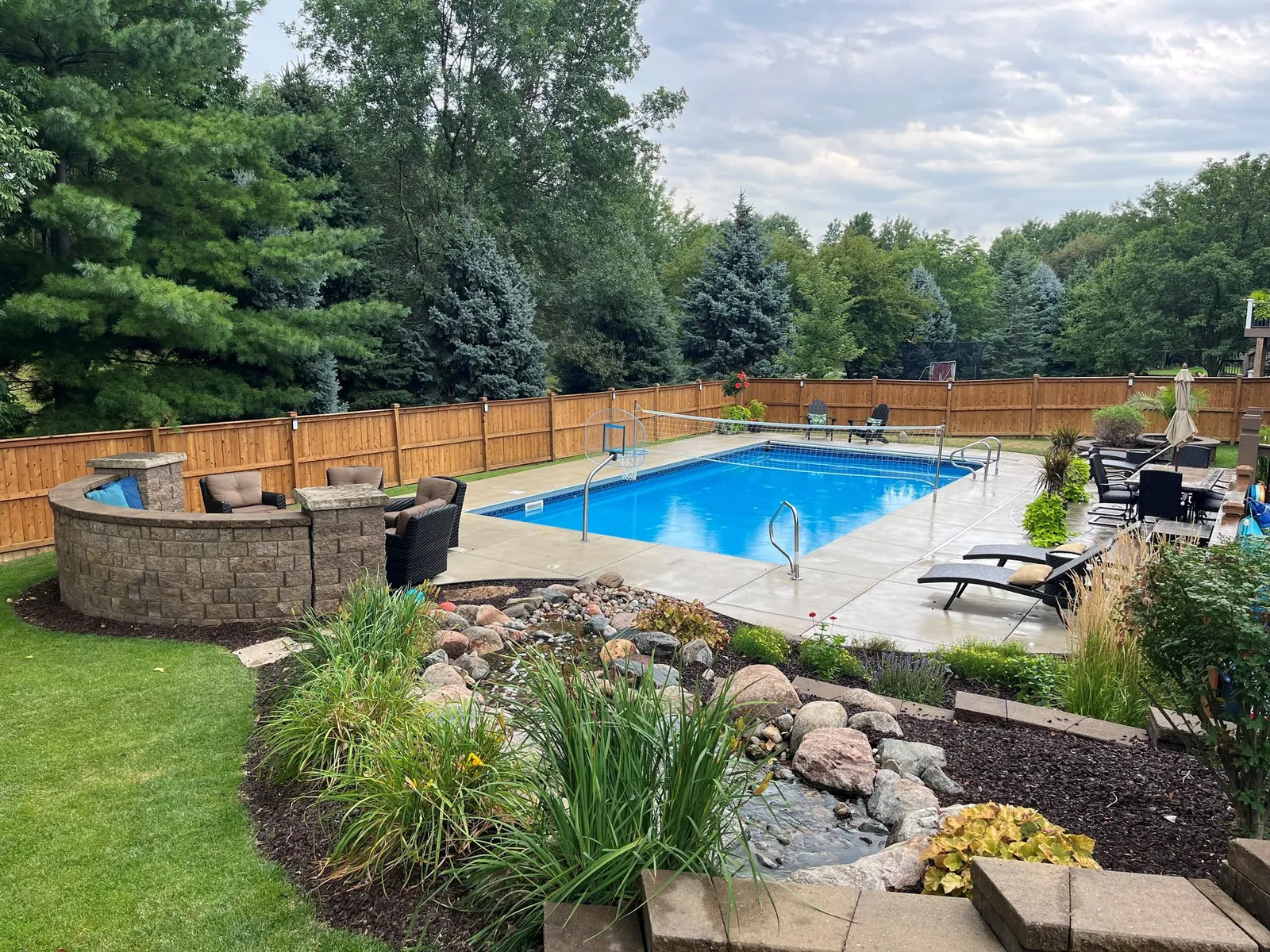
Every Omaha pool owner has seen it: three days of storms, and the water that was clear on Monday is cloudy or green by Friday. Rain itself is nearly pure, and that is the problem. It dilutes everything you had balanced, and what runs into the pool with it feeds everything you did not want. This is why the store gets busy after a wet week, and why a water test is the right first move.
What rain actually does to the water
It dilutes the chlorine. An inch of rain on a typical backyard pool adds a lot of water with no sanitizer in it. Free chlorine drops, and if the pool was sitting at the low end already it can hit zero overnight.
It dilutes the stabilizer and the salt. Cyanuric acid, the stabilizer that keeps chlorine from burning off in sunlight, goes down with every inch of rain and every inch you pump out. Salt pools lose salt the same way, and a salt cell that reads low stops making chlorine.
It moves the pH and the alkalinity. Rain is slightly acidic, so pH and total alkalinity tend to fall after a storm. Low alkalinity makes the pH bounce around, and low pH is hard on liners, heaters and skin.
It brings in the yard. Runoff carries soil, grass clippings, fertilizer, pollen and leaves. Fertilizer is phosphate, and phosphate is algae food. Organic debris eats chlorine and clouds the water.
It raises the level. A skimmer that is under water cannot skim. An overfull pool also floods the deck and, on some pads, the equipment.
The after-rain routine, in order
- Skim and empty the baskets first. Get the leaves and debris out before they sink and start to break down.
- Lower the water to mid-skimmer. Use waste mode or a submersible pump. Do not drain below the skimmer mouth.
- Test. Free chlorine, pH, total alkalinity, stabilizer, and salt if you have a cell. Bring a sample to the counter at Wright Plaza for a free test if you want the full picture, including phosphates and metals.
- Balance alkalinity, then pH. Alkalinity first; it steadies the pH. Then adjust the pH into the 7.2 to 7.6 range.
- Shock. A heavy rain almost always calls for a shock dose, in the evening, with the pump running. Chlorine and shock →
- Run the filter. Twenty-four hours straight after a storm, then back to the normal schedule. Backwash or clean the cartridge when the pressure climbs.
- Brush. Walls, steps, behind the ladder. Algae starts where water does not move.
- Re-test after 24 hours. Top up the stabilizer or the salt if they dropped, and add a clarifier if the water is still hazy. Balancers → · Algaecides and clarifiers →
Hot tubs after a storm
A covered spa mostly shrugs off rain, but a cover that has been leaking or sitting open lets the same dilution happen in a much smaller body of water. Test the spa after a storm, bring the sanitizer and the alkalinity back, and check that the cover is not waterlogged; a heavy cover is a cover that needs replacing. Spa water care →
Closed pools
If the pool is already closed for the winter, the job is the cover. A solid cover needs its pump running so the water does not pool on top and drag the cover in. A mesh safety cover passes the rain through; check that the level has not climbed above the skimmer and, if the water looks cloudy through the mesh, add a dose of winter algaecide. Our pool closing page covers the rest of the winter routine.
When to call instead
Green water that does not clear after a shock and two days of filtering, a pump that lost prime, a level that keeps falling after you lowered it, or equipment that got flooded. Those are service calls, not chemistry. Pool service → · Leak detection →
Frequently asked questions
Should I shock the pool after it rains?
After a heavy rain, yes, once you have tested. Rain dilutes the chlorine and brings in organics, so a shock plus a day of filtering gets the sanitizer back where it belongs before algae gets a start. A light shower does not need it.
Why did my pool turn green after a storm?
Runoff and debris carry phosphates and organics into water whose chlorine was just diluted, and warm, still water does the rest. Skim, brush, shock, run the filter continuously and bring a sample in; a clarifier or phosphate remover may be the second step.
Do I need to lower the water after rain?
If the level is above the middle of the skimmer mouth, yes. A skimmer that is under water cannot pull the surface, and an overfull pool floods the deck and the equipment pad. Pump it down to mid-skimmer and leave it there.
What about rain on a closed, covered pool?
A solid cover needs its cover pump running so the weight of the water does not sag the cover into the pool. A mesh safety cover lets the rain through; check that the level has not risen above the skimmer and add a dose of winter algaecide if you can see the water is clouding.